


Health Insights
-
Health Insights
 2026-10-13
Your joints are far more than two bones meeting at a bend. They're a coordinated system of cartilage that helps cushion and protect bone surfaces, synovial fluid that lubricates movement, ligaments that stabilize joints, tendons that connect muscles to bones, and muscles that help control every move. Each has a distinct job, and they all depend on one another to keep your body moving. Think of it as a team working behind the scenes to make everyday life possible. When one part needs attention, the bigger picture matters. Understanding how these structures work—and what different types of support can realistically do—can help you make more informed decisions about your joint health, rather than relying on impressive promises printed on a bottle.
-
Health Insights
 2026-10-09
Your immune system is one of the hardest-working parts of your body—and one of the easiest to take for granted. Every day, it identifies potential threats, coordinates defenses, and helps restore balance behind the scenes. You rarely notice any of it until something goes wrong. But the system that protected you at 25 isn't necessarily operating the same way at 55 or 75. That doesn't mean your immune system simply switches off as you age. The changes are more subtle, and arguably more interesting. Some immune responses become less efficient, while low-grade inflammation may linger even when there's no obvious threat to address. Researchers are increasingly calling these related processes immunosenescence and inflammaging, and they're helping scientists better understand why immune health becomes a more complex conversation over time.
-
Health Insights
 2026-10-07
There are few objects in modern life with a more complicated relationship with our legs than a staircase. We see the stairs and think, “I'll take the elevator today.” Then we see them again tomorrow and somehow that elevator button looks even better. But perhaps those flights of stairs deserve a second look. Research has been giving this everyday form of movement some surprisingly serious attention. A systematic review and meta-analysis published in 2026 combined nine studies involving more than 480,000 people and found that people who regularly climbed stairs had a 39% lower risk of cardiovascular death and a 24% lower risk of death from any cause compared with people who didn't regularly take the stairs. Stair climbing was also associated with lower risks of heart attack, stroke, and heart failure. So, should you start treating every staircase like a free gym membership?
-
Health Insights
 2026-10-02
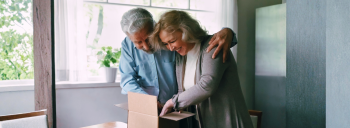
There’s a funny thing about health expenses: the costs we notice most are often the ones that happen after something has already gone wrong. The grocery bill gets bigger. Insurance premiums climb. Prescriptions add up. A routine doctor’s visit becomes a specialist appointment—and suddenly, what seemed like a manageable health concern can carry a very real financial price tag. But what if we looked at the equation from the other direction? Instead of asking only, “What will it cost to treat this?” perhaps we should also be asking, “What might it be worth to invest in better health before treatment becomes necessary?”
-
Health Insights
 2026-09-30
Take a look inside your pantry. There’s probably a bag of something crunchy. A few things in boxes. Something frozen for nights when cooking feels like a personal attack. Maybe a breakfast cereal that has been in the cabinet long enough to qualify for its own mailing address. None of that automatically means you're doing something wrong. But researchers are asking an intriguing question: Could the amount of ultra-processed food in our diets have something to do with how our brains age? A 2026 study of 5,370 U.S. adults age 50 and older in the American Journal of Public Health found that higher ultra-processed-food intake was associated with greater risks of dementia, cognitive impairment without dementia (CIND), and the combined outcome during follow-up. A separate 2026 analysis found a potential association between higher ultra-processed-food intake and executive-function impairment. Those findings are worth paying attention to. They're also not proof.
-
Health Insights
 2026-09-25
Challenging your brain is a worthwhile habit. But brain health is considerably bigger than remembering the difference between “their,” “there,” and “they’re.” Your brain doesn't exist in isolation. Your sleep, cardiovascular health, muscles, stress levels, social life, diet, and daily activity all contribute to the environment in which your brain functions. That’s why AARP’s Global Council on Brain Health identifies six interconnected pillars: physical activity, restorative sleep, healthy eating, social connection, mental stimulation, and stress management. Think of them less like six boxes to check and more like gears in the same machine. When one starts turning more smoothly, it can help move the others along with it.
-
Health Insights
 2026-09-22
Ordinary movements are easy to take for granted—until they aren’t. That’s one reason National Falls Prevention Awareness Week, observed September 21–25 in 2026, deserves more attention than it usually gets. The National Council on Aging (NCOA) notes that more than one in four older adults falls each year in the United States, and falls can threaten both safety and independence. Yet, falling is not simply an unavoidable part of getting older. There are practical steps that can help reduce risk. And perhaps the most useful way to think about fall prevention is this: you’re not trying to avoid movement. You’re trying to protect your ability to move confidently. NCOA recommends six key steps for helping prevent falls. They cover much more ground than simply watching where you walk—and together, they create a surprisingly comprehensive picture of healthy aging.
-
Health Insights
 2026-09-18
Fall is an excellent time to make a few small adjustments that support the way you actually live. No dramatic reinvention required. Just a collection of manageable habits that can help you move more, sleep better, eat well, protect your energy, and pay closer attention to what your body is telling you. Think of them as 10 small wellness wins worth collecting before winter. Let's talk about it.
-
Health Insights
 2026-09-15
There’s a strange thing about everyday aches and pains: sometimes, the less you move, the worse you feel. You wake up stiff and decide to take it easy. You spend a little more time sitting. Maybe you skip your usual walk because your knees, hips, back, or shoulders are bothering you. A few hours later, you stand up—and somehow, you feel even stiffer than you did that morning. It seems backwards. If something hurts, shouldn’t resting it be the obvious answer? Not always. Our bodies are built for movement. Joints, muscles, connective tissue, and even the systems responsible for balance and coordination all work together through regular activity. When movement decreases, that entire system can start to feel less fluid.
-
Health Insights
 2026-09-11
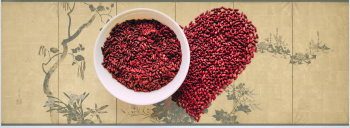
What can a centuries-old fermented food possibly have to do with modern cholesterol health? The answer begins long before cholesterol numbers appeared on laboratory reports or doctors started talking about LDL. For generations, traditional cultures used fermentation to transform ordinary foods into something entirely different—changing their color, flavor, composition, and nutritional properties in the process. Red yeast rice is one particularly fascinating example. Created by fermenting rice with a specific type of yeast, this striking red ingredient has a long history in traditional Chinese food and medicinal practices. What people discovered through centuries of use eventually caught the attention of modern researchers, who began asking a very different question: What exactly is being created during the fermentation process?


